If your Sydney home was built or renovated before the late 1980s, there’s a real chance it contains asbestos somewhere: the roof, the eaves, the bathroom walls, under the lino or even inside the ceiling. But that risk isn’t spread evenly across the city.
You might be wondering ‘does my suburb have asbestos?’
Some suburbs were built almost entirely from fibro during the post-war housing boom. Others were built earlier, later, or have since been largely rebuilt. Knowing which group your suburb falls into helps you decide how careful to be before you renovate, drill, sand or even pressure-wash, and when it’s time to call in professional Sydney asbestos removal rather than tackling a job yourself.
This guide covers the Sydney suburbs with the highest concentration of asbestos homes, why those areas carry more risk, and the signs that suggest your own home may contain it.
Which Sydney Suburbs Have the Highest Asbestos Risk?
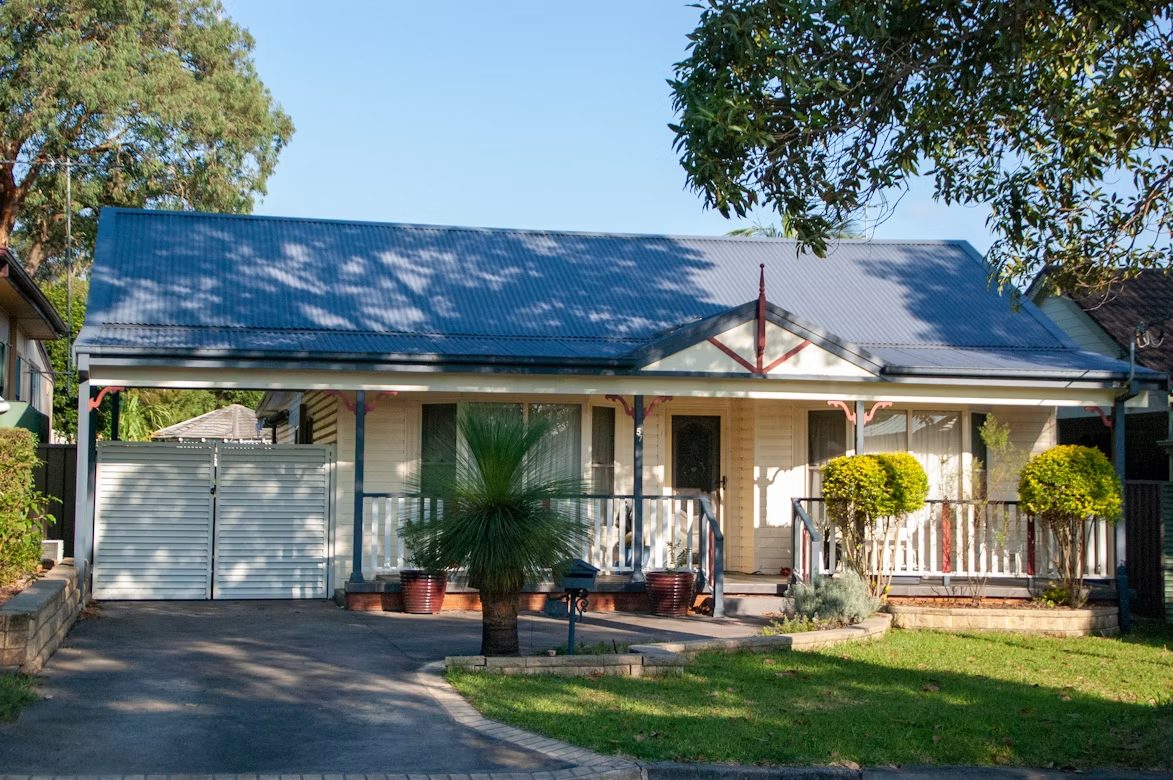
The highest concentrations of asbestos homes in Sydney are in the western and south-western suburbs that were built out between the late 1940s and the 1970s, especially former Housing Commission estates. The main hotspots are:
- Blacktown and Mount Druitt: Seven Hills, Lalor Park, Blacktown, Doonside and Mount Druitt
- Cumberland (the fibro belt core): Merrylands, Guildford, Holroyd, Granville, Auburn and Lidcombe
- Liverpool and Fairfield: the former Green Valley estate suburbs such as Miller and Green Valley, plus Fairfield and Cabramatta
- Macarthur: Campbelltown, Airds, Claymore and Minto
- Penrith and Bankstown: Penrith, St Marys, Bankstown and Punchbowl
An Australian Manufacturing Workers’ Union (AMWU) report named four suburbs (Seven Hills, Lalor Park, Blacktown, Doonside) in the Blacktown LGA among the 20 most asbestos-affected in NSW.
Older parts of the Inner West, the Northern Beaches, the North Shore and the Central Coast also carry real risk, for different reasons. We cover each region below.
Why Asbestos Risk Isn’t Spread Evenly Across Sydney
Asbestos risk comes down to when a suburb was built and who built it. Fibro (asbestos cement sheeting) was cheap, fire-resistant and quick to put up, so it became the go-to material during Australia’s post-war housing boom from 1945 through the 1960s. By the mid-1960s, fibro featured in close to one in five Australian homes, and New South Wales used it more than almost any other state.
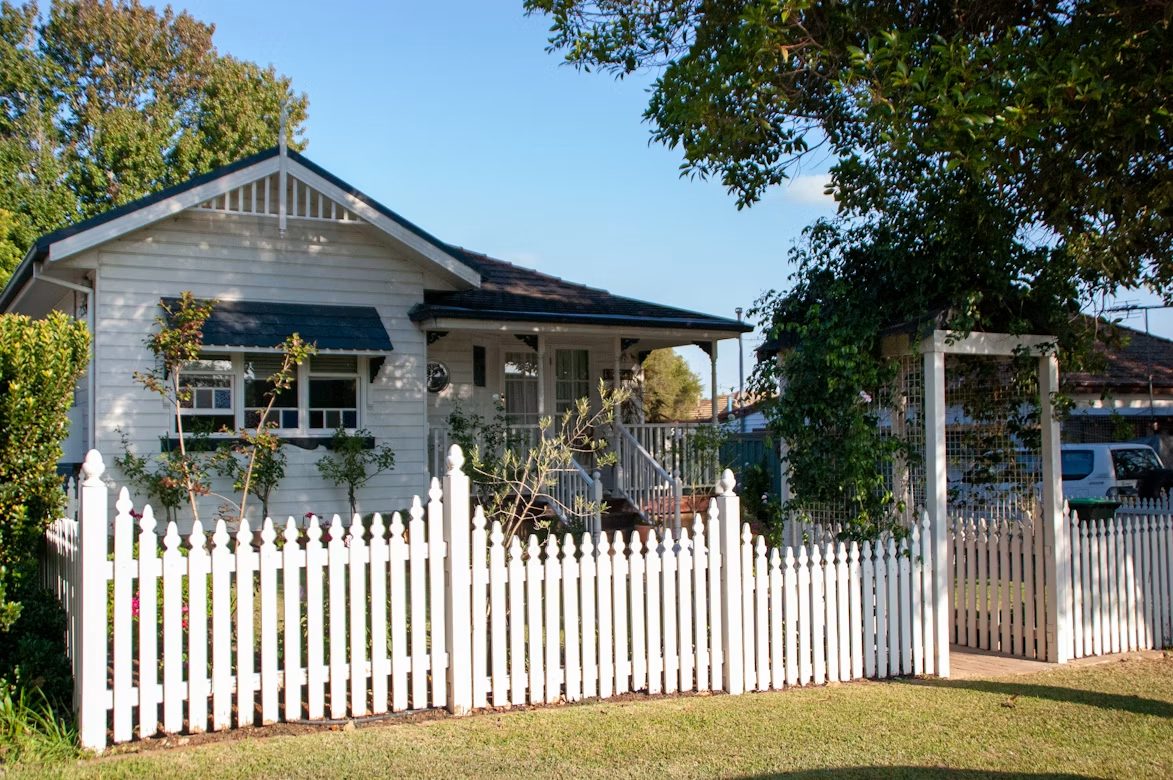
The key point is where it was used. State housing authorities built entire suburbs of fibro cottages for returning servicemen, migrant families and low-income households. In wealthier owner-occupied areas, fibro was more often limited to sheds, fences, laundries and back extensions. That’s why whole streets in Western Sydney are fibro, while in the North Shore the risk is more likely to be hidden in a garage or a 1970s bathroom renovation.
Asbestos wasn’t limited to fibro houses either. Brick veneer and weatherboard homes from the same era commonly used asbestos sheeting in eaves, wet areas and behind wall tiles.
How likely is your home to contain asbestos?
In NSW, asbestos was phased out of flat fibro sheets by 1982, corrugated sheets by 1984, and all other building products by around 1986. Asbestos was banned nationally from 31 December 2003. Use this as a rough guide:
| When your home was built or renovated | Likelihood of asbestos |
|---|---|
| Before 1982 | Very high: assume it’s present until tested |
| 1982 to 1987 | High: older stock was still being installed |
| 1987 to 1990 | Possible, especially in specific components |
| After 1990 | Unlikely |
A home’s build date isn’t the whole story. A 1995 house with a 1980s shed, fence or salvaged materials can still contain asbestos.
Fibro Belt Sydney: How Western Sydney Became the City’s Asbestos Hotspot
“Fibro belt” is the name given to the band of Western Sydney suburbs where whole streets of homes were built from asbestos cement sheeting after World War II. It’s the main reason Western Sydney has the highest concentration of asbestos homes in the city today.
Where the fibro belt came from
Asbestos cement sheeting, or fibro, was developed as a house-building material in Australia in the 1920s. It was marketed as fireproof, durable, easy to transport and, above all, cheap. Corrugated versions became standard for roofs and fences, and flat sheets were used for walls, eaves and ceilings.
After 1945, Sydney faced a severe housing shortage. Returning servicemen, young families and new migrants all needed homes quickly, and rising car ownership meant people could live further from the city. Farmland and market gardens across the west were subdivided into new suburbs, and fibro was the fastest, most affordable way to build them.
The NSW Housing Commission became one of the biggest users. Rather than a fibro shed here and there, it built entire estates of fibro cottages in areas such as Lalor Park, Mount Druitt and Green Valley. Private builders and owner-builders in suburbs like Merrylands, Guildford and Blacktown did the same. The belt even had its own asbestos cement factory at Camellia, near Parramatta, which operated for decades.
Why the fibro belt matters for asbestos risk today
The fibro belt is where Sydney’s asbestos risk is most concentrated, for three reasons:
- Density: In many fibro belt suburbs, asbestos isn’t a hidden surprise in one room. It’s often the whole house, plus the fence, shed and garage.
- Age: Most of these homes are now 50 to 75 years old. Weathered roofs, cracked sheets and brittle eaves are more likely to release fibres than sheeting in good condition.
- Renovation pressure: As fibro belt suburbs grow and property values rise, many original cottages are being renovated, extended or knocked down. That’s exactly when asbestos gets disturbed.
This is why councils across the fibro belt, including Cumberland, run ongoing asbestos awareness campaigns. If you own or are buying a pre-1987 home in these suburbs, it’s safest to assume asbestos is present and have it tested before any work begins.
Sydney’s Asbestos Hotspots, Region by Region
Blacktown and Mount Druitt
This is the most clearly documented asbestos cluster in Sydney. A report compiled by the Australian Manufacturing Workers’ Union named Seven Hills, Lalor Park, Blacktown and Doonside among the 20 NSW suburbs most at risk from asbestos.
Much of the area was built as Housing Commission stock in the 1950s and 1960s. The Mount Druitt estate alone delivered around 8,000 dwellings, and suburbs in and around it, such as Whalan, Lethbridge Park, Hebersham, Shalvey, Tregear and Willmot, still have large numbers of original fibro homes. In these houses, fibro was often used for external walls, eaves, laundries, kitchens and bathrooms.
Cumberland: the heart of the fibro belt
The former Holroyd council area, now part of Cumberland, sits at the centre of what’s often called Sydney’s “fibro belt”. Asbestos consultants report that most pre-1990 houses in the former Holroyd area contain asbestos products, and Cumberland Council runs dedicated asbestos awareness campaigns for residents.
Alongside Merrylands, Guildford, Auburn and Lidcombe, check older homes in Wentworthville, Pendle Hill, Greystanes and Merrylands West. Nearby Camellia was home to a major asbestos cement factory for decades. If you’re unsure about your own home, talk to our Western Sydney asbestos removal team about an inspection.
Liverpool and Fairfield: the Green Valley estates
The Housing Commission’s Green Valley estate, built between 1961 and 1965, was one of the largest housing schemes of its time in Australia. More than 7,400 cottages, flats and units went up within a few years, many of them fibro.
Today that footprint covers Cartwright, Busby, Heckenberg and Sadleir, alongside Miller and Green Valley. Neighbouring Fairfield, Cabramatta and Liverpool grew rapidly in the same era, and original asbestos dividing fences are still common across the area.
Macarthur and Campbelltown
Campbelltown’s growth accelerated from the 1960s, with later Housing Commission estates in Airds, Claymore and Minto. Suburbs such as Macquarie Fields and Ambarvale were built toward the end of the fibro era, so risk varies more from street to street. Homes built before the mid-1980s should still be treated with caution. If your home was built before the mid-1980s, our Macarthur asbestos removal team can test it before you start any work.
Penrith, St Marys and Canterbury-Bankstown
Penrith, St Marys and Kingswood expanded quickly through the 1960s and 1970s. Bankstown, Punchbowl, Lakemba and Yagoona have large numbers of post-war fibro and brick veneer homes, many with asbestos eaves, fences and bathrooms. We regularly inspect and remove asbestos from homes like these through our Canterbury Bankstown service.
Are Inner West Homes Affected by Asbestos?
The Inner West has a different risk profile. Many homes in Ashfield, Marrickville and Leichhardt were built between the 1920s and 1960s and renovated during the asbestos era. Asbestos typically turns up in internal wall linings, ceiling sheets and behind bathroom tiles rather than on the outside.
Older weatherboard homes in Balmain and Annandale can also contain asbestos in backing boards, flooring and insulation. Before renovating, book a test with our Inner West asbestos removal team.
Are Northern Beaches and North Shore Homes at Risk of Asbestos?
Manly, Dee Why, Forestville and much of the beaches saw heavy development from the 1950s to the 1970s. Fibro cladding, eaves and garage linings are the usual culprits, and many owners only discover asbestos when they pull apart a garage, shed or old beach shack. See more on our Northern Beaches page.
The North Shore and Hills District also carry a specific loose-fill insulation risk, covered in the next section.
St George and the Central Coast
Parts of St George were built out in the same post-war decades and include pockets of fibro housing. Further north, Gosford, Woy Woy and Umina Beach have many fibro holiday shacks and cottages that later became permanent homes, often with asbestos roofing and cladding.
Loose-Fill Asbestos: A Risk Outside the Fibro Belt
Loose-fill asbestos is raw, crushed asbestos that was pumped into ceiling spaces as insulation in the 1960s and 1970s, most famously by a Canberra business known as “Mr Fluffy”. Unlike fibro, it’s friable, meaning fibres can become airborne easily and migrate into living areas.
Most affected homes are in the ACT and southern NSW, but a number of Sydney homes have also tested positive. Positive results have been recorded in the Hills District, Hornsby and Ku-ring-gai, North Sydney and the Northern Beaches, including a family home in Asquith.
If your pre-1980 home is in one of these areas:
- Search your address on the NSW Government’s Loose-fill Asbestos Insulation Register.
- Don’t enter the roof space or disturb ceiling insulation until it’s been checked.
- Arrange an asbestos inspection before any electrical, roofing or ceiling work.
Loose-fill is rare in Sydney overall, but when it is present it’s far more hazardous than bonded fibro, so it’s worth ruling out. Browse our North Shore page for local services.
Signs Your Home Might Contain Asbestos
You can’t confirm asbestos just by looking at a material. Only laboratory testing can do that. But these signs mean it’s worth assuming asbestos is present until a professional says otherwise.
Age and history signs
- The home was built or renovated before 1987.
- It’s former Housing Commission stock, or a 1950s to 1970s fibro cottage.
- It has older DIY additions: a sleep-out, enclosed verandah, sunroom or rear extension.
- There’s an old garage, shed, carport or outhouse on the block.
Visual signs
- Dimpled sheets: flat cement sheets with a “golf ball” dimple pattern on one side are a classic fibro indicator.
- Cover strips: narrow timber or plastic battens covering the joins between wall or ceiling sheets.
- Grey cement-like sheeting: grey, bluish-grey or off-white sheets that feel hard and thin, not like plasterboard.
- Corrugated roofing or fencing: wavy cement sheets, often weathered, stained or covered in lichen.
- Textured ceilings: stippled or sprayed-on ceiling finishes in older homes.
Where to look
- Eaves, soffits and fascias
- External cladding and gable ends
- Bathroom, laundry and kitchen wall linings, especially behind tiles
- Under vinyl sheet flooring and old lino
- Electrical meter boards and switchboard backing
- Flue pipes, downpipes and old stormwater pipes
- Fences, garages and sheds
- Ceiling spaces (for loose-fill insulation)
Condition red flags
Bonded asbestos in good condition is low risk if it’s left alone. Act sooner if you notice:
- Cracked, broken or crumbling sheets
- Weathered roofing shedding material into gutters
- Fraying pipe lagging or insulation
- Storm, fire or water damage to older wall or roof sheeting
Never pressure-wash, sand, drill or cut suspected asbestos. These are the most common ways homeowners expose themselves without realising.
What to Do If You Suspect Asbestos
- Leave it alone. Don’t touch, break or clean the material, and keep kids and pets away from any damaged areas.
- Book a professional inspection. A licensed assessor can take samples safely and send them to a NATA-accredited laboratory, which issues a Certificate of Analysis.
- Plan before you renovate. Get testing done before any demolition, bathroom or kitchen renovation, re-roofing or fence replacement.
- Use a licensed removalist. Removing asbestos safely, and disposing of it legally, protects your family, your neighbours and your property value.
Book an asbestos inspection anywhere in Sydney
Whether you’re in the Western Sydney fibro belt, a renovated Inner West terrace or a mid-century beach house, BreathEASY’s SafeWork NSW licensed team (licence AD211293) can inspect, test and safely remove asbestos from your property. We service 913 suburbs across Greater Sydney.
Find your suburb or book an asbestos inspection today, or call 02 8093 5461.
Frequently Asked Questions
What is Sydney’s fibro belt?
The fibro belt is a group of Western Sydney suburbs built largely from asbestos cement sheeting during the post-war boom. It’s centred on Cumberland and Blacktown and extends into Fairfield, Liverpool and parts of Penrith and Bankstown.
Does my suburb have asbestos houses?
Almost certainly, if it has homes built or renovated before 1987. Asbestos was used in brick, weatherboard and fibro homes alike, so the suburb only tells you the likely concentration. Testing is the only way to know for sure about your own home.
Are brick homes safe from asbestos?
Not necessarily. Brick and brick veneer homes from the 1950s to 1980s often have asbestos in eaves, bathrooms, laundries, garage linings and under flooring.
Is asbestos dangerous if it’s not disturbed?
Bonded asbestos in good condition poses a low risk when left alone. The danger comes when it’s damaged, weathered or disturbed by cutting, drilling, sanding or pressure-washing, which releases fibres into the air.
Can I remove asbestos myself in NSW?
NSW rules limit how much bonded asbestos a homeowner can remove, and friable asbestos must always be removed by a licensed professional. Given the health risks and disposal rules, using a licensed removalist is the safest option for any amount.
How do I check for loose-fill asbestos?
Search your address on the NSW Loose-fill Asbestos Insulation Register, then arrange a professional inspection if your home was built before 1980 in an affected area.