You’re halfway through a strip-out, you pull back a wall lining, and there it is. Old fibro. Now the job stops, because the next call you make decides whether you’re allowed to keep going or whether you’ve just turned a straightforward reno into a notifiable removal. Most people on the tools have hit that exact pause at least once.
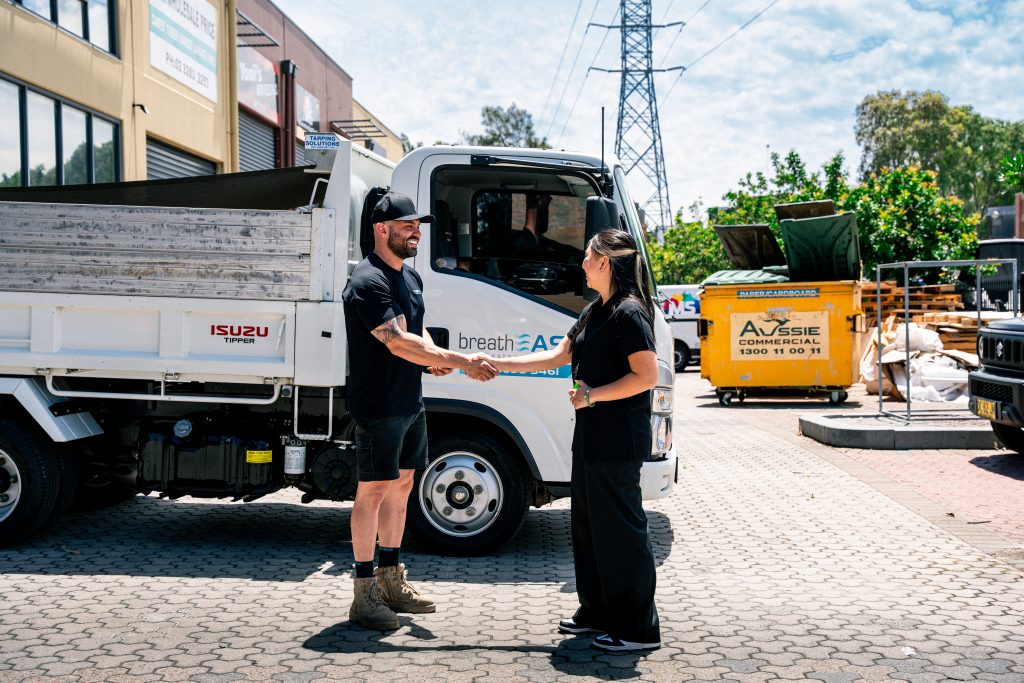
BreathEasy Asbestos runs a mobile Licensed Asbestos Removal service across Western Sydney and the surrounding suburbs, under a Class B licence, so the pause is a familiar one. The question underneath it is always the same. Is this a job you can legally finish yourself, or is this the point where you down tools and get a licensed crew in?
That answer comes down to two things: what kind of asbestos it is, and how much of it there is.
The 10 square metre line, and why it’s the line
Start with the number, because it’s the one that changes what you can do. In NSW you can remove less than 10 square metres of non-friable asbestos without a licence, as long as it’s in good nick and you use the right precautions. Cross that line and you’re into licensed territory.
Ten square metres is easier to picture than it sounds. NSW Government guidance puts it at a wall roughly five metres by two, or the sheeting off one small bathroom. That’s it. A single fibro bathroom will often sit right on the threshold, which is why so many bathroom jobs are the ones that stall.
The 10 square metre rule (NSW)
No licence is required to remove less than 10 square metres of non-friable asbestos or asbestos-containing material (ACM). Removing more than that requires a Class B (or Class A) licence. Any amount of friable asbestos must be removed by a Class A licensed removalist. Licensed removal work must be notified to SafeWork NSW at least five days before it starts. Source: Service NSW / SafeWork NSW.
Go past 10 square metres, or past 100 kilos of asbestos waste, and the disposal has to be tracked through WasteLocate as well. So it’s not only who lifts the sheets. It’s the notification, the containment, and the paper trail that follows the load to an EPA-approved facility.
Class B is the bonded-only licence
A Class B Asbestos Removal Licence lets a business remove non-friable asbestos, the bonded stuff, in any amount over 10 square metres. SafeWork NSW is blunt about the limit: Class B holders can remove non-friable asbestos and not friable asbestos, full stop. The eligibility and training detail sits on the SafeWork NSW Class B licence page.
Class B Asbestos Removal Licence: definition
A Class B licence authorises the holder to remove non-friable (bonded) asbestos, ACM, and any associated asbestos-contaminated dust or debris, in quantities greater than 10 square metres. Class B holders cannot remove friable asbestos. Source: SafeWork NSW.
That’s the licence BreathEasy Asbestos holds (NSW licence AD211293). One practical upside of running a licensed crew: the licence covers work both over and under the 10 square metre line, so a small bathroom job and a full house strip get the same compliant handling. SafeWork NSW notes you’ll typically run into non-friable asbestos in walls of anything built or renovated before 1990, which covers a big slice of Western Sydney housing stock.
Where Class A takes over
The split between the two licences is about how stable the material is. Class A covers friable asbestos: the soft, crumbly stuff you can crush by hand. Sprayed insulation, pipe lagging, fire-damaged fibro that’s basically dust in waiting. Government guidance says all friable asbestos has to go to a Class A licensed removalist, because it’s far more likely to put fibres in the air, and it’s classed as high-risk work under NSW WHS law.
Class B stays with the bonded material, where the fibres are locked into a solid product like cement sheeting. Worth knowing: a Class A holder can legally do Class B work too, but not the other way around. So when you see the “A and B class friable asbestos removal licence” question floating around, that’s the hierarchy it’s pointing at.
What counts as non-friable
Non-friable asbestos is most of what’s actually in an old house. Fibro sheeting on the fence, garage and eaves. Corrugated cement roofing. Vinyl floor tiles and their backing. Asbestos cement pipes under the slab.
What is non-friable (bonded) asbestos?
Non-friable asbestos, commonly called bonded asbestos, is asbestos-containing material where the fibres are firmly bound in a solid matrix such as cement, vinyl or resin. Undisturbed and in good condition, the fibres are not readily released. Common examples: fibro cement sheeting, corrugated roofing, eaves, vinyl floor tiles, asbestos cement pipes.
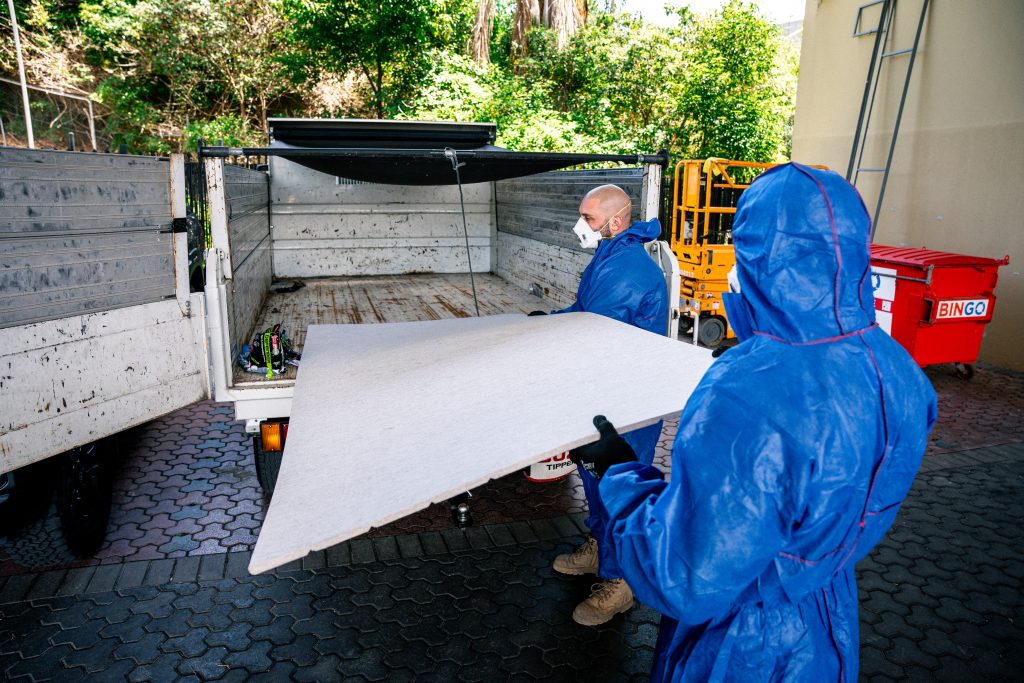
Left alone, it’s stable. The trouble is the grinder, the drill, the demo bar, or thirty years of weather cracking the sheet. Once any of those get involved, fibres start to move, which is why bonded asbestos removal in Sydney runs on wetting down, containment and controlled disposal rather than speed.
Why the rules are this tight
The health side is the reason none of this is optional. NSW Government health guidance states there’s no safe level of asbestos exposure, and that inhaled fibres can cause diseases that take decades to show and can’t be cured, only managed. The full read is on the NSW health risks page.
That’s the logic behind the licence system. A number on a wall stops being about tidy paperwork once you know the fibres don’t announce themselves and the damage shows up twenty or thirty years later.
Reading your own job
So, standing over that opened-up wall, the call is usually this. Under 10 square metres of intact bonded sheeting, in good condition, and you can handle it yourself with the right gear and disposal. Over that, or anything cracked, weathered or crumbling, and it’s a licensed job.
If you can’t tell what you’re looking at, that’s the moment for an asbestos inspection before anyone disturbs it further. BreathEasy Asbestos works as a mobile Class B crew across Western Sydney and the wider metro, so it’s a matter of coming to the site, looking at the actual material, and giving you a straight read on which side of the line it sits.
If it’s turned out to be a licensed job and you want it off your plate, check whether your suburb is on the locations page and get in touch for a quote.
About BreathEasy Asbestos: BreathEasy Asbestos is a Class B licensed asbestos removal company (NSW licence AD211293) founded by Paul Obeid, with over 12 years of asbestos removal experience across Sydney. The team provides mobile, on-site bonded asbestos removal, inspection and decontamination across Western Sydney and surrounding suburbs, working to SafeWork NSW licensing and disposal requirements.
Frequently Asked Questions
What is a Class B licence for asbestos?
A Class B Asbestos Removal Licence lets a business remove non-friable, or bonded, asbestos in any amount over 10 square metres. According to SafeWork NSW, Class B holders can remove non-friable asbestos and asbestos-containing material, but not friable asbestos, which stays with Class A. That’s the licence BreathEasy Asbestos holds (NSW licence AD211293), and it covers the bonded material found in most Sydney homes and small commercial buildings.
Do you have to be licensed to remove asbestos in NSW?
In most cases, yes. Under the asbestos regulations NSW works to, any removal of more than 10 square metres of non-friable asbestos requires a Class B (or Class A) licence, and any amount of friable asbestos requires a Class A Asbestos Removal Licence. A homeowner can legally remove less than 10 square metres of non-friable material without a licence, provided it’s in good condition and handled with the right precautions.
How much asbestos can be removed without a licence?
Less than 10 square metres of non-friable (bonded) asbestos. NSW Government guidance describes 10 square metres as roughly a wall five metres by two, or the sheeting off one small bathroom. Go over that, or hit 100 kilos of asbestos waste, and the job needs a licensed removalist plus WasteLocate tracking for disposal. Any friable asbestos, at any size, needs a Class A crew regardless.
What is the difference between a Class A and Class B asbestos removal licence?
It comes down to how stable the material is. A Class A licence covers friable asbestos, the soft, crumbly type that puts fibres in the air easily, plus all non-friable work. A Class B licence covers non-friable, bonded asbestos over 10 square metres only. A Class A holder can legally do Class B work, but a Class B holder cannot do Class A work. That’s the hierarchy behind the “A and B class friable asbestos removal licence” question people search for.