Renovating an older Sydney home is exciting, but before you pick up a hammer, drill, or sledgehammer, there’s a step too many homeowners skip: checking for asbestos. Australia has one of the highest rates of asbestos-related disease in the world, and a huge share of that risk comes from ordinary renovations gone wrong. Cutting, sanding, or demolishing materials that contain asbestos releases microscopic fibres into the air, and those fibres can cause serious illness decades later. If your home was built before the late 1980s, testing before you start isn’t optional caution, it’s essential planning, and knowing when to arrange Asbestos Removal Sydney professionals can handle safely is part of that planning.
Why Are Homes Built Before 1987 More Likely to Contain Asbestos?
Asbestos was used in more than 3,000 building products across Australia until it was progressively phased out through the 1980s and fully banned nationwide in 2003. The year 1987 is commonly cited by councils and government agencies as a practical cutoff, since asbestos use in most fibro sheeting and building products had been largely discontinued by the mid-to-late 1980s. If your home was built or last renovated before this point, there’s a strong likelihood that at least some building materials on the property contain asbestos, even if the home isn’t made of fibro at all. Brick, weatherboard, and clad homes built during this era can still contain asbestos in less visible places, which is why so many Asbestos Removal Sydney enquiries come from homeowners renovating properties they assumed were asbestos-free.
Where Is Asbestos Commonly Found in Sydney Homes?
Asbestos-containing materials turn up in far more places than most homeowners expect. Common locations include:
- Fibro walls – both internal and external wall sheeting were commonly made from asbestos cement until the ban
- Roof sheets – corrugated asbestos cement roofing and ridge capping were widely used from the 1940s through the 1980s
- Eaves – flexible asbestos cement boards were a standard eaves material for decades
- Bathrooms – wall sheeting, splashbacks, and even vinyl flooring backing can contain asbestos
- Kitchens – older splashbacks, flooring, and cabinetry backing boards are common culprits
- Flooring – vinyl floor tiles and the backing beneath carpet or linoleum often contain asbestos
- Ceilings – flat sheeting, cornices, and in some homes, loose fill insulation from the 1960s and 70s
- Garages and sheds – often overlooked, but frequently built entirely from fibro cement sheeting
Because asbestos was used so widely, it’s realistic to assume it could be almost anywhere on a pre-1987 property until testing proves otherwise.
What Should You Check Before Starting Renovations?
Before any demolition, drilling, or removal work begins, check the age of your home and any past renovation history, since additions or updates from different decades may contain different materials. Look for areas most likely to be disturbed by your planned works, such as walls being removed, flooring being replaced, or roofing being stripped. It’s also worth checking council or state government asbestos records if available, and arranging a professional inspection for any area your renovation will physically disturb, rather than assuming visual condition tells the full story.
How Do You Know If a Material Contains Asbestos?
You cannot identify asbestos simply by looking at a material. Asbestos-containing fibre cement sheeting looks virtually identical to modern, asbestos-free equivalents, and even experienced tradespeople can’t confirm content by sight. The only reliable method is having a sample collected and tested by a NATA-accredited laboratory. Treating any suspect material from a pre-1987 property as asbestos-containing until proven otherwise is the safest approach.
Should You Test for Asbestos Before Renovating?
Yes, without question, if your home falls into the higher-risk age bracket. Testing before renovations begin means you know exactly what you’re dealing with before any material is disturbed, which allows the work to be planned safely, legally, and without unexpected delays mid-project. Skipping this step and discovering asbestos partway through a renovation is far more disruptive and costly than testing upfront.
What Happens If Asbestos Is Found?
Finding asbestos doesn’t mean your renovation is off the table, it just changes how the work needs to proceed. If the material is in good, stable condition and won’t be disturbed by your planned works, it may be safe to leave in place and manage over time. If it will be disturbed, damaged, or removed, the work needs to follow strict safety procedures, and depending on the quantity and type, may need to be carried out by a licensed asbestos removal specialist.
Can You Remove Asbestos Yourself in NSW?
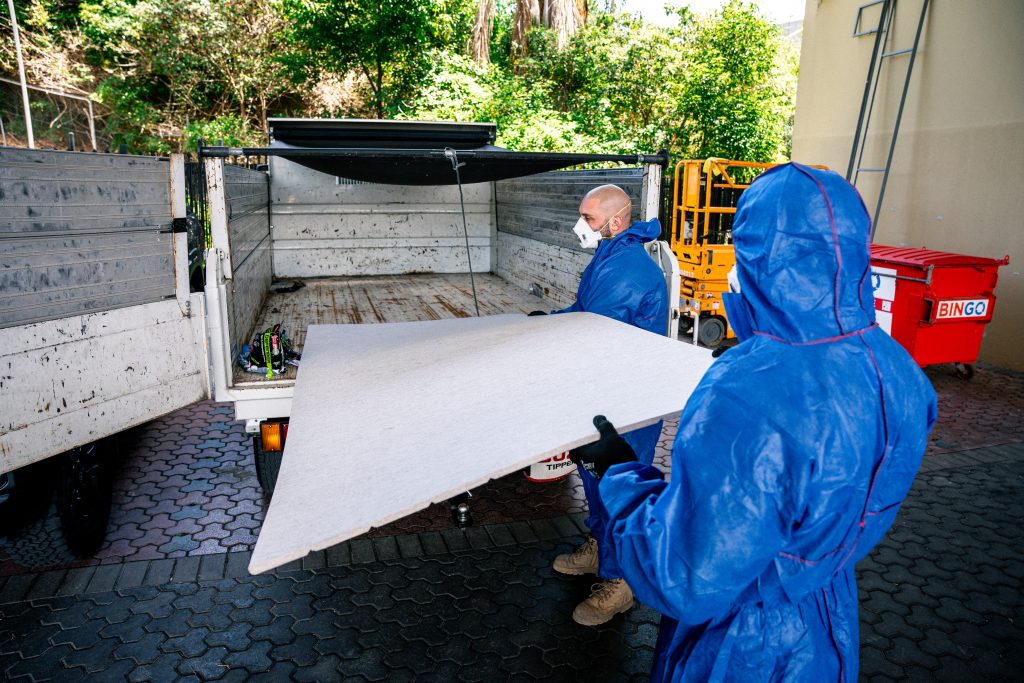
In limited circumstances, yes. Under NSW rules, a homeowner may remove up to 10 square metres of bonded (non-friable) asbestos themselves, provided the work follows SafeWork NSW guidelines for safe handling, containment, and disposal. Anything above 10 square metres of bonded asbestos requires a licensed asbestos removalist or a bonded asbestos removal licence obtained through approved training. Friable asbestos, which is crumbly and releases fibres more easily, must always be removed by a licensed professional, regardless of quantity. Given the health risks involved, many homeowners choose to engage licensed removal specialists even for smaller jobs.
How Much Does Asbestos Removal Cost in Sydney?
Costs vary significantly depending on the type of asbestos, the quantity involved, accessibility, and whether containment and air monitoring are required. Small, straightforward bonded asbestos jobs will cost considerably less than larger removals involving friable material, elevated roof areas, or extensive containment measures. Because pricing depends so heavily on the specifics of each property, the most accurate way to budget is a site assessment followed by a written quote from a licensed asbestos removal company.
Renovate With Confidence
Checking for asbestos before you renovate protects your health, keeps your project compliant with NSW regulations, and avoids costly surprises once work is underway. If your Sydney home was built before 1987, treat testing as the first item on your renovation checklist, not an afterthought.
Get a Professional Asbestos Inspection Before You Renovate
Don’t leave it to guesswork. Our licensed team can inspect, test, and safely manage or remove asbestos from your Sydney home before your renovation begins. Contact us today to book an inspection and start your project with confidence.