If you own a property in Sydney, particularly one built or renovated before 1990, asbestos isn’t just a buzzword—it’s a likely reality. From the classic fibro cottages of the Inner West to the aging industrial warehouses in Western Sydney, asbestos-containing materials (ACMs) are woven into the fabric of our city.
At BreathEasy Asbestos Removal, we believe that knowledge is your first line of defence. Whether you are planning a bathroom renovation or managing a large-scale facility, understanding how to identify, check, and safely remove this hazardous material is critical. In this guide, we answer the most pressing questions about Asbestos Removal Sydney to help you keep your property compliant and your family safe.
What is Asbestos and Why is it Dangerous?
What is asbestos? Asbestos is a group of naturally occurring silicate minerals made up of tiny, microscopic fibres. Because it is incredibly resistant to heat, fire, and chemicals, it was once considered a “wonder material” in the Australian construction industry.
How Dangerous is Asbestos?
While it was prized for its durability, we now know it is a silent killer. How dangerous is asbestos? When ACMs are disturbed—through drilling, sawing, or simply aging—they release microscopic fibres into the air. If inhaled, these fibres become trapped in the lungs forever.
How much asbestos exposure is dangerous? Health experts agree that there is no known safe level of exposure. While long-term occupational exposure carries the highest risk of diseases like asbestosis and lung cancer, even short-term, intense exposure can lead to mesothelioma, a terminal cancer that can take 20 to 60 years to develop.
When was Asbestos Banned in Australia?
Australia has one of the highest rates of asbestos-related disease in the world because we were among the highest consumers of the material.
When was asbestos banned? A total national ban on the use, reuse, import, transport, and sale of all forms of asbestos came into effect on 31 December 2003.
When did asbestos stop being used? Although the final ban was in 2003, the phase-out began much earlier. Use of “blue” and “brown” asbestos was largely stopped by the mid-1980s.
When did asbestos stopped being used in Sydney homes? If your home was built before 1982, it is highly likely to contain asbestos. If it was built between 1982 and 1990, it is likely. Even homes built up until 2003 could potentially contain leftover stock.
How to Identify and Spot Asbestos
One of the most difficult things about this material is that you cannot always “see” it.
What Does Asbestos Look Like?
In its raw form, asbestos can look like fluffy clumps of blue, brown, or white fibres. However, in Sydney homes, it is usually mixed with cement or other binders.
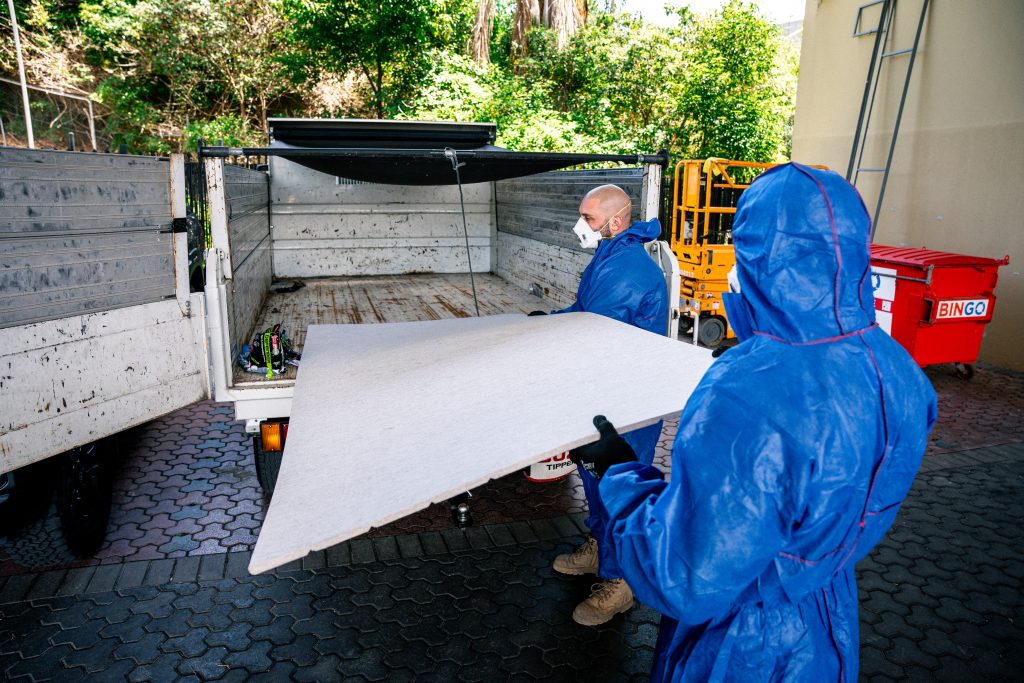
What does asbestos sheeting look like? Often referred to as “fibro,” it looks like thin, hard grey sheets. It was commonly used for external walls, eaves (under the roof), and wet areas like laundries and bathrooms.
How to recognise asbestos in other forms? It can also be found in vinyl floor tiles (often with a black “mastic” adhesive), corrugated roofing (Super Six), and even “popcorn” textured ceilings popular in the 70s and 80s.
How to Detect Asbestos
You cannot detect asbestos by smell or taste. How to spot asbestos visually often involves looking for “dimples” or a golf-ball-like texture on the back of fibro sheets, or looking for older “bitumen” based adhesives.
How can you tell asbestos is present? The “Golden Rule” in Sydney is simple: If your house was built before 1990 and you haven’t tested the material, assume it is asbestos.
What about Commercial & Industrial properties?
While many homeowners deal with small amounts of fibro, the risks scale up significantly for businesses. Commercial Asbestos Removal Sydney is a strictly regulated field in 2026. Commercial property owners have a legal obligation to maintain an “Asbestos Register” and a Management Plan under the Work Health and Safety Regulation 2017.
In the industrial sector, the stakes are even higher. Industrial Asbestos Removal Sydney often involves “friable” asbestos—material that can be easily crushed into powder by hand. This is commonly found in old pipe lagging, boiler insulation, and fireproofing. Because friable asbestos is so high-risk, it requires Class A Licensing, air monitoring by an independent assessor, and strict containment zones. At BreathEasy, we provide end-to-end compliance for Sydney businesses to ensure your site stays safe and legal.
How to Check and Test for Asbestos
If you are planning a renovation, you need to know how to check for asbestos before the first hammer swings.
How Do You Check for Asbestos?
A visual check is never 100% accurate. How do I check for asbestos safely?
Check the Age: Use your property’s build date as the primary indicator.
Professional Inspection: Hire a licensed asbestos assessor to conduct a site survey. They know the common hiding spots, such as switchboards, flue pipes, and underfloor insulation.
How Do You Test for Asbestos?
The only definitive way to confirm the presence of fibres is through laboratory analysis.
How to test for asbestos: A small sample (about the size of a 50-cent piece) is taken and sent to a NATA-accredited laboratory.
How to test for asbestos yourself? While DIY test kits exist, we highly recommend against them. Taking a sample involves breaking the material, which can release fibres into your home. A professional has the PPE and “wet methods” to take samples without contaminating the room.
Summary: Steps to Protect Your Property
Why BreathEasy is the Choice for you
Managing asbestos isn’t just about hauling away old sheets; it’s about meticulous safety and legal compliance. Whether you need a residential clearance or are looking for Commercial or Industrial Asbestos Removal Sydney, BreathEasy Asbestos Removal is here to help.
We use the latest 2026 industry standards, including H-class HEPA filtration and negative pressure units, to ensure that not a single fibre remains. Our team handles the testing, the council notifications, and the final clearance certification so you can breathe easy in your own home or workplace.
Suspect asbestos in your Sydney property? Don’t guess—get it tested. Contact BreathEasy Asbestos Removal today for a professional consultation.