Once you know your property has asbestos, the next worry is usually the removal itself. It’s a fair concern, an Asbestos Removal Sydney job involves specialised procedures precisely because the goal isn’t just taking material away, it’s making sure not a single fibre ends up somewhere it shouldn’t. Here’s exactly what happens from the moment a licensed contractor arrives to the day you get the all-clear to move back in.
How Is Asbestos Removed From a House?
Asbestos removal follows a strict, staged process designed to contain the material, protect everyone involved, and leave the property genuinely safe once the job is done. It isn’t simply a matter of pulling out old sheeting and taking it to the tip. Depending on whether the material is bonded (non-friable) or crumbly (friable), the level of containment and precaution required can vary significantly, but the underlying principle is always the same: prevent fibres from becoming airborne, and if they do, contain them completely within a controlled work area.
What Happens Before Asbestos Removal Starts?
Before any physical removal begins, the contractor needs a clear picture of what they’re dealing with. This starts with an asbestos survey or register identifying exactly what materials are present, their location, and their condition. From there, a removal control plan is developed, setting out how the work will be carried out safely, what containment measures are needed, and what disposal arrangements are in place. For larger or more complex jobs, this planning stage also includes notifying the relevant regulator, arranging any required permits, and briefing everyone involved on the specific risks of that job.
What Are the Steps Involved in Asbestos Removal?
A typical professional removal follows this general sequence:
- Site preparation and containment – The work area is sealed off using polythene sheeting, tape, and airlock systems to physically separate it from the rest of the property.
- Negative air pressure setup – For larger or friable asbestos jobs, negative air pressure units are installed, continuously drawing air out through HEPA filtration so that even if the sheeting is accidentally breached, fibres are pulled inward rather than escaping outward.
- Wetting down materials – Asbestos-containing materials are dampened before and during removal, since wet fibres are far less likely to become airborne than dry ones.
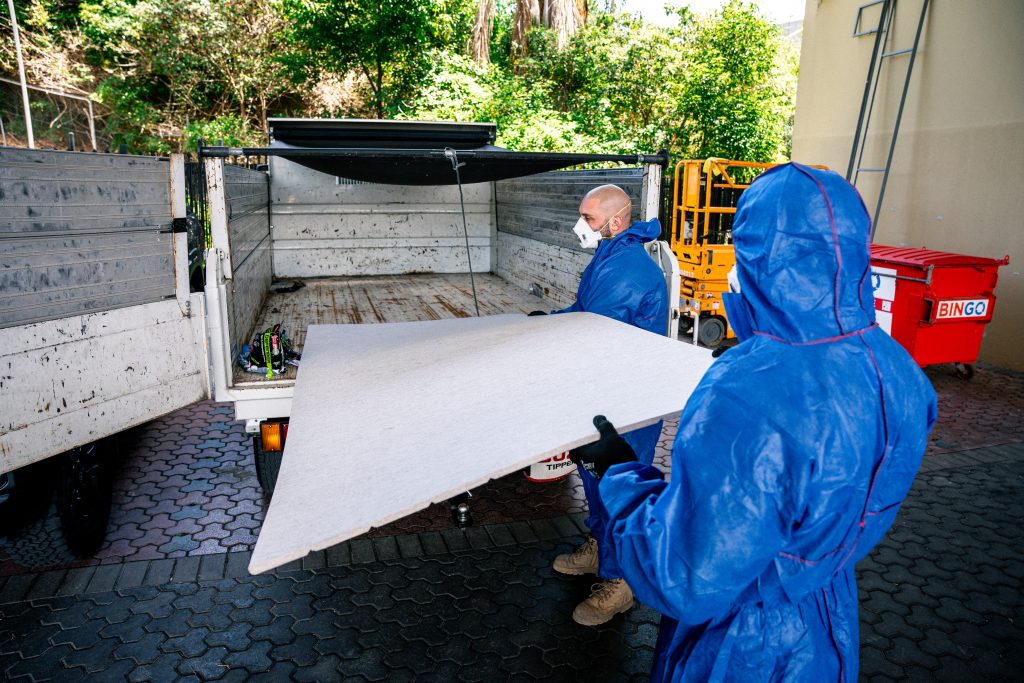
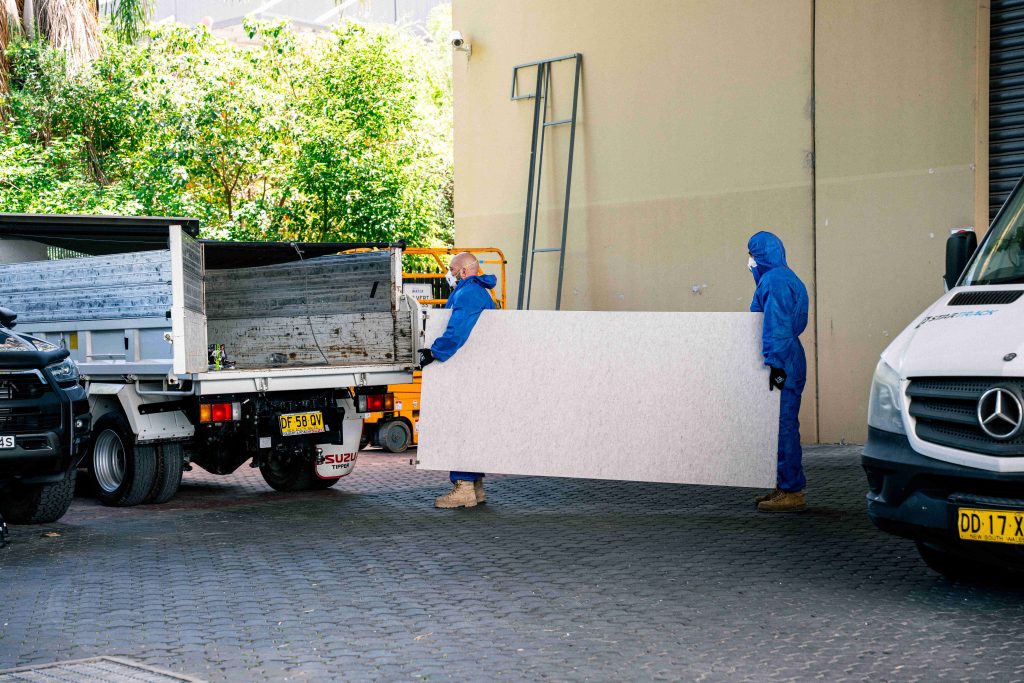
- Careful removal – Materials are removed intact where possible, using methods that minimise breaking, cutting, or disturbing the material any more than necessary.
- Double bagging and labelling – Removed material is immediately sealed in heavy-duty plastic, clearly labelled as asbestos waste, ready for transport.
- Decontamination – Workers pass through a decontamination unit before leaving the work area, ensuring no fibres are carried out on clothing, equipment, or skin.
- Site cleaning – The enclosure is thoroughly cleaned, typically using HEPA-filtered vacuums rather than sweeping or dry dusting, which could disturb any remaining fibres.
- Clearance inspection and air monitoring – An independent assessor conducts a visual inspection and, for friable asbestos work, air monitoring to confirm fibre levels are below the strict clearance standard.
- Clearance certificate issued – Once the area passes inspection, a formal clearance certificate confirms the space is safe to re-enter and use normally.
How Do Professionals Remove Asbestos?
Licensed removalists are trained specifically in these procedures, and the approach differs depending on material type. Non-friable (bonded) materials, like standard fibro cement sheeting, are generally removed as whole panels wherever possible, keeping fibres locked within the material rather than releasing them. Friable materials, which are already crumbly or can be crumbled by hand, require significantly more caution, including full enclosure, negative air pressure, and continuous air monitoring throughout the job, since these materials release fibres far more readily.
What Does Asbestos Removal Involve, Practically Speaking?
For homeowners, this generally means the affected area of your property becomes temporarily off-limits for the duration of the work, sealed off from the rest of the house or a business’s occupied space. Depending on the scope, this might be a single room, a roof, or in some cases the entire property if a larger asbestos removal job is underway. Contractors will typically brief you on which areas need to stay clear, expected access restrictions, and any temporary changes to power, water, or ventilation needed to support the containment setup.
How Long Does Asbestos Removal Take?
Timelines vary considerably based on the quantity and type of asbestos involved, accessibility, and whether the job involves simple bonded material or more complex friable removal requiring full containment and air monitoring. A small, contained bonded asbestos job, such as a section of eaves or a single wall, might be completed within a day. Larger jobs, such as a full roof replacement or a whole-house friable removal, can take considerably longer once you factor in containment setup, the removal itself, decontamination, cleaning, and the clearance process before certification.
What Equipment Is Used for Asbestos Removal?
Standard equipment includes polythene sheeting and specialised tape for containment, negative air pressure units fitted with HEPA filtration capable of capturing fibres as fine as 0.3 microns, decontamination units for workers moving in and out of the site, HEPA-filtered vacuums for cleaning rather than conventional vacuums or brooms, and full personal protective equipment including respirators, disposable coveralls, and gloves. Air monitoring equipment is also used by an independent assessor to measure fibre concentrations both during removal and as part of the final clearance process.
What Happens During an Asbestos Removal Job, Day to Day?
On a multi-day job, work typically begins each day with a check of the containment area and equipment before removal resumes, followed by the physical removal, bagging, and disposal preparation. At the end of each day, the enclosure is left secure, and any partially completed sections remain contained until the job is finished. Documentation, including daily logs of what was removed and any air monitoring results, is usually maintained throughout, building the paper trail that supports the final clearance certificate.
How Do Asbestos Removal Contractors Work?
Licensed contractors work to a documented removal control plan tailored to your specific property and the materials involved, rather than a one-size-fits-all approach. They coordinate containment setup, manage waste transport to a licensed disposal facility, and arrange for an independent assessor, separate from the removal company itself, to carry out the clearance inspection. This independence matters, since it means the people confirming the site is safe aren’t the same people who did the removal work, providing an extra layer of assurance for property owners.
What Happens After Asbestos Removal?
Once the removal is complete, the site undergoes thorough cleaning, followed by a clearance inspection. For friable asbestos, this includes formal air monitoring showing fibre levels are below the strict clearance standard, alongside a visual check confirming no dust or debris remains. Only once this clearance certificate is issued can the containment be safely dismantled and the area returned to normal use. This certificate is your assurance, in writing, that the property is genuinely safe.
Ready for Safe, Professional Asbestos Removal
Understanding the process is one thing, having it carried out correctly is what actually matters. Our licensed team manages every stage of asbestos removal, from initial assessment through to containment, removal, and independent clearance certification, so you can be confident your property is genuinely safe once the job is done. Contact us today to discuss your asbestos removal project.