Removing asbestos safely is only half the job. What happens to that material afterwards is governed just as strictly, and getting it wrong carries real legal and environmental consequences. Whether you’re a homeowner tackling a small job yourself or working with Asbestos professionals on a bigger renovation, understanding exactly how Asbestos Disposal in Sydney is regulated, from packaging through to transport and final disposal, is essential.
What Counts as Asbestos Waste in NSW?
Asbestos waste includes any material contaminated with asbestos fibres, whether that’s whole sheets of fibro cement, broken fragments, dust and debris, or contaminated personal protective equipment used during removal. It doesn’t need to be a large quantity to count. Even small offcuts or asbestos-contaminated soil are treated as regulated waste under NSW law and must be handled and disposed of accordingly.
Where Can You Legally Dispose of Asbestos?
You can only dispose of asbestos waste at a landfill that’s specifically licensed to accept it. Not every waste facility takes asbestos, so it’s essential to contact your nearest licensed site in advance to confirm they can accept the load and to ask about their booking and disposal process. The NSW EPA maintains a list of facilities across the state that accept household asbestos from the public, organised by region, and it’s always worth phoning ahead before you arrive, since acceptance conditions can vary between sites.
How Must Asbestos Waste Be Packaged?
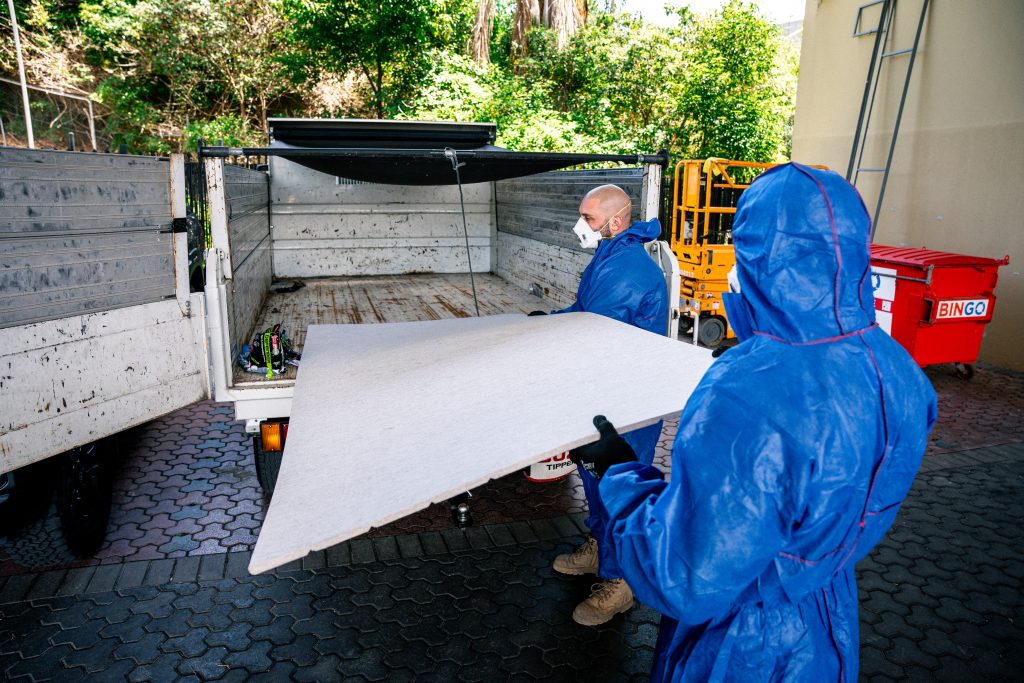
Before transport, asbestos waste needs to be securely contained to prevent fibres from escaping. This generally means double-wrapping material in heavy-duty plastic sheeting, sealing it thoroughly with tape, and clearly labelling it as asbestos waste. Any contaminated PPE used during removal should be bagged and disposed of the same way. Proper packaging isn’t just good practice, licensed landfills will often refuse to accept loads that haven’t been contained correctly, so it pays to get this right before you even leave the property. This is one of the areas where experienced Asbestos Removal Sydney teams add real value, since correct containment is second nature to them.
Can You Transport Asbestos Yourself?
Yes, for smaller quantities, homeowners are permitted to transport their own asbestos waste to a licensed disposal facility. That said, doing so comes with responsibility. You need to ensure the load is properly contained, that you’ve confirmed the destination facility will accept it, and that you understand any tracking obligations that apply once you cross certain quantity thresholds.
The 10m² / 100kg Tracking Rule Explained
If you’re disposing of more than 100 kilograms or 10 square metres of asbestos waste from your home and transporting it yourself, you’re legally required to notify the EPA using the disposing of household asbestos form within 24 hours after the load has been delivered to the licensed facility. This notification happens after the waste has actually been transported, not before. It exists so the EPA can track larger volumes of asbestos waste moving through the system, reducing the risk of it going missing or ending up somewhere it shouldn’t.
What Is IWTS and When Do You Need It?
The Integrated Waste Tracking Solution, or IWTS, is the NSW EPA’s system for tracking the movement of certain waste types, including asbestos, when it’s transported by licensed contractors. If a licensed removalist or contractor is transporting more than 100 kilograms or 10 square metres of asbestos waste on your behalf, they are required to notify the EPA about that movement through the IWTS. This system has effectively taken over the tracking role that WasteLocate previously served for contractor-transported loads, giving the EPA visibility over where asbestos waste originates, where it’s headed, and confirmation that it actually arrives at a licensed facility.
Can You Put Asbestos in a Skip Bin?
No, not unless that skip bin is specifically approved to hold asbestos waste. Placing asbestos in an ordinary uncovered skip bin, or one not licensed for this purpose, is illegal under NSW law. It’s also illegal to put asbestos waste in your kerbside bin, or to attempt to reuse or recycle it in any way, such as repurposing old fibro sheeting for building projects or fencing. Asbestos waste has exactly one legal destination: a landfill licensed to accept it.
How Much Does Asbestos Disposal Cost in NSW?
Disposal costs vary between licensed facilities, and if you choose to remove and transport small sections of asbestos yourself, you’re responsible for covering those disposal costs directly. Pricing depends on the volume of waste, the specific facility, and any additional handling requirements. Because rates differ so much between sites, it’s worth phoning a few licensed facilities near you to compare before committing to a booking, particularly for larger loads.
What Happens If Asbestos Is Illegally Dumped?
The penalties are severe and have increased substantially in recent years, reflecting how seriously NSW treats asbestos-related environmental offences. Under the Protection of the Environment Operations Act 1997, illegal dumping offences involving asbestos attract some of the highest penalties in the Act, with maximum fines reaching into the millions of dollars for corporations and hundreds of thousands of dollars for individuals for the most serious offences, alongside the possibility of imprisonment in wilful cases. On-the-spot fines also apply for smaller-scale dumping, and asbestos-related offences can carry additional executive liability, meaning company directors can be held personally responsible. These penalties exist because illegally dumped asbestos poses an ongoing risk to public health and the environment long after the person responsible has moved on.
Who Is Responsible for Asbestos Disposal?
Ultimately, whoever removes or arranges the removal of the asbestos is responsible for ensuring it’s disposed of correctly. If you remove a small amount yourself, that responsibility, and the associated disposal costs, sits with you. If you engage a licensed removalist, they take on responsibility for correctly containing, transporting, and disposing of the waste, including meeting any IWTS notification requirements for larger loads. Given how strict the surrounding regulations are, this is one of the strongest arguments for using a licensed asbestos removal company rather than attempting a large job independently.
What Should You Do If You Find Illegally Dumped Asbestos?
Don’t touch it, and don’t attempt to move or clean it up yourself. Disturbing dumped asbestos can release fibres into the air, creating a health risk for you and anyone nearby. Instead, report it to your local council or the NSW EPA’s Environment Line, providing as much detail on the location as possible. Reporting promptly allows the appropriate authority to arrange safe assessment and removal, and helps prevent the material from being disturbed further before it can be properly managed.
Dispose of Asbestos the Right Way
Correct asbestos disposal protects your health, keeps you on the right side of some genuinely serious penalties, and ensures this hazardous material stays out of the environment. If you’re removing asbestos as part of a renovation or clean-up, our licensed team can manage the entire process safely and in full compliance with NSW regulations, from removal through to proper disposal. Contact us today for expert advice.