Asbestos regulation isn’t just a residential concern. Commercial property owners, landlords, and business operators across Australia carry specific legal obligations under Work Health and Safety (WHS) laws, and getting this wrong can mean serious fines, halted projects, or worse, exposure to a substance that causes fatal illness. If your commercial building was constructed before 2004, here’s what you actually need to know, and if you’re searching for Commercial Asbestos Removal Sydney, this guide covers the compliance steps behind that service.
Is Asbestos Removal Required Before Commercial Renovations?
If your renovation, fit-out, or demolition work is going to disturb asbestos containing materials (ACMs), then yes, it needs to be safely removed or managed before that work proceeds. Cutting, drilling, sanding, or demolishing materials that contain asbestos releases airborne fibres, and this is exactly the scenario WHS laws are designed to prevent. Before any renovation begins on a pre-2004 commercial building, an asbestos assessment should identify what’s present so the removal or containment work can be planned properly, rather than discovered mid-project.
What Are the Asbestos Removal Requirements for Businesses?
Businesses (referred to as a “person conducting a business or undertaking,” or PCBU, under WHS law) must ensure any removal work is carried out safely and, in most cases, by a licensed asbestos removalist. The licensing threshold depends on the type and quantity of asbestos:
- Class A licence is required for friable asbestos (crumbly material that releases fibres easily) and asbestos contaminated dust or debris.
- Class B licence covers non-friable asbestos, such as bonded asbestos cement sheeting, generally where the area exceeds 10 square metres.
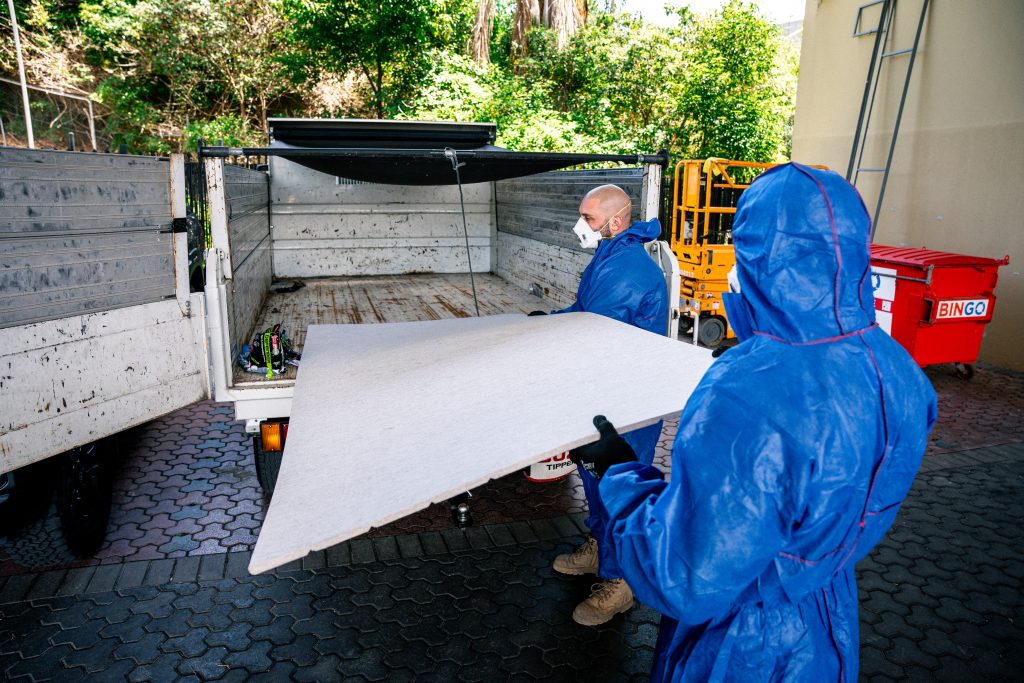
Removalists must also notify the relevant state regulator, typically at least five calendar days before work begins, and follow strict controls around containment, air monitoring, and disposal at approved facilities.
Do Commercial Properties Need an Asbestos Management Plan?
Yes, if asbestos has been identified or is assumed to be present. Once a register confirms ACMs exist, the person with management or control of the workplace must ensure a written asbestos management plan is prepared. This plan needs to:
- Identify the location of all known or assumed asbestos
- Document decisions and control measures for managing the risk
- Outline emergency procedures if asbestos is disturbed
- Be reviewed at least every five years, or sooner if asbestos is removed, more is found, or conditions change
The plan must be accessible to anyone working at the site, and a nominated person should be responsible for keeping it current.
Who Is Responsible for Asbestos in a Workplace?
Responsibility generally sits with the PCBU and the person with management or control of the workplace, which in commercial settings could be the property owner, the managing agent, or the tenant business, depending on the lease and control arrangements. This party is responsible for ensuring the asbestos register exists, the management plan is maintained, and workers and contractors are informed before any work that might disturb ACMs. Multiple parties can share duties concurrently, so it pays to clarify who holds responsibility in writing.
What Are the Asbestos Regulations for Commercial Buildings?
Commercial asbestos obligations sit under the Work Health and Safety Act and Regulations in each state and territory, based on the national model laws developed by Safe Work Australia. These regulations cover identification, registers, management plans, licensing for removal work, air monitoring, waste disposal, and notification requirements. Non-compliance can result in improvement notices, prohibition notices, penalty notices, or prosecution for serious breaches.
Do Landlords Need to Remove Asbestos Before Leasing?
Not necessarily removal, but landlords do need to manage the risk. If a commercial building constructed before 2004 has known or assumed asbestos, the landlord (as the person with management or control) must maintain a register and management plan, and ensure tenants and their workers are informed before undertaking any work that could disturb ACMs. Removal becomes mandatory when the material is damaged, deteriorating, or scheduled to be disturbed by planned works.
Are Businesses Required to Have an Asbestos Register?
Yes, for any workplace where asbestos is identified or likely to be present. An asbestos register is not required only if the building was constructed after 31 December 2003 and no asbestos has been identified or is likely to be present. For older commercial buildings, the register must record what asbestos has been found, its location, type, and condition, and it must be kept up to date and accessible at the workplace.
What Documents Are Required for Commercial Asbestos Removal?
Before removal work begins, businesses typically need an asbestos survey or assessment report, the asbestos register, the asbestos management plan, a removal control plan prepared by the licensed removalist, and written notification to the state regulator. After the work, a clearance certificate confirming the area is safe for reoccupation should also be obtained and retained.
What Happens if a Business Ignores Asbestos Risks?
Ignoring asbestos obligations exposes a business to regulatory penalties, including improvement or prohibition notices and prosecution for serious breaches, but the bigger risk is human. Workers, tenants, and visitors can be exposed to airborne fibres linked to mesothelioma and other fatal lung diseases, often without knowing it for decades. Non-compliance can also derail renovation timelines, void insurance, and create long term liability for property owners.
Get Expert Help With Commercial Asbestos Compliance
Navigating asbestos regulations shouldn’t fall entirely on your shoulders. If you have Asbestos in your Roof contact us, and our licensed team can help you assess, manage, and safely remove asbestos so your commercial project stays compliant and your people stay safe.